

Post Traumatic Stress Disorder (PTSD)
Oftentimes, when people hear the acronym PTSD, they think about people coming back from military service being reminded of the traumatic things that they may have seen during a war. But PTSD is in no way exclusive to members of the military – it can happen to absolutely anyone who experiences something extremely stressful or terrifying, or even witnessing it.
At Mindwell Urgent Care, we want to de-mystify PTSD and help people of all ages and walks of life to move toward recovery.
What is PTSD?
Post-traumatic stress disorder occurs when someone experiences something traumatic and may have a hard time adjusting or coping with those feelings and emotions. This can start right after the incident takes place, a few weeks or months later when the brain has had time to process everything that happened, or even years after the event when a memory is triggered.
The symptoms of PTSD can change the way a person feels and thinks in a way that can be difficult to explain to others, since it brings up the memories of the event all over again.
Symptoms of PTSD
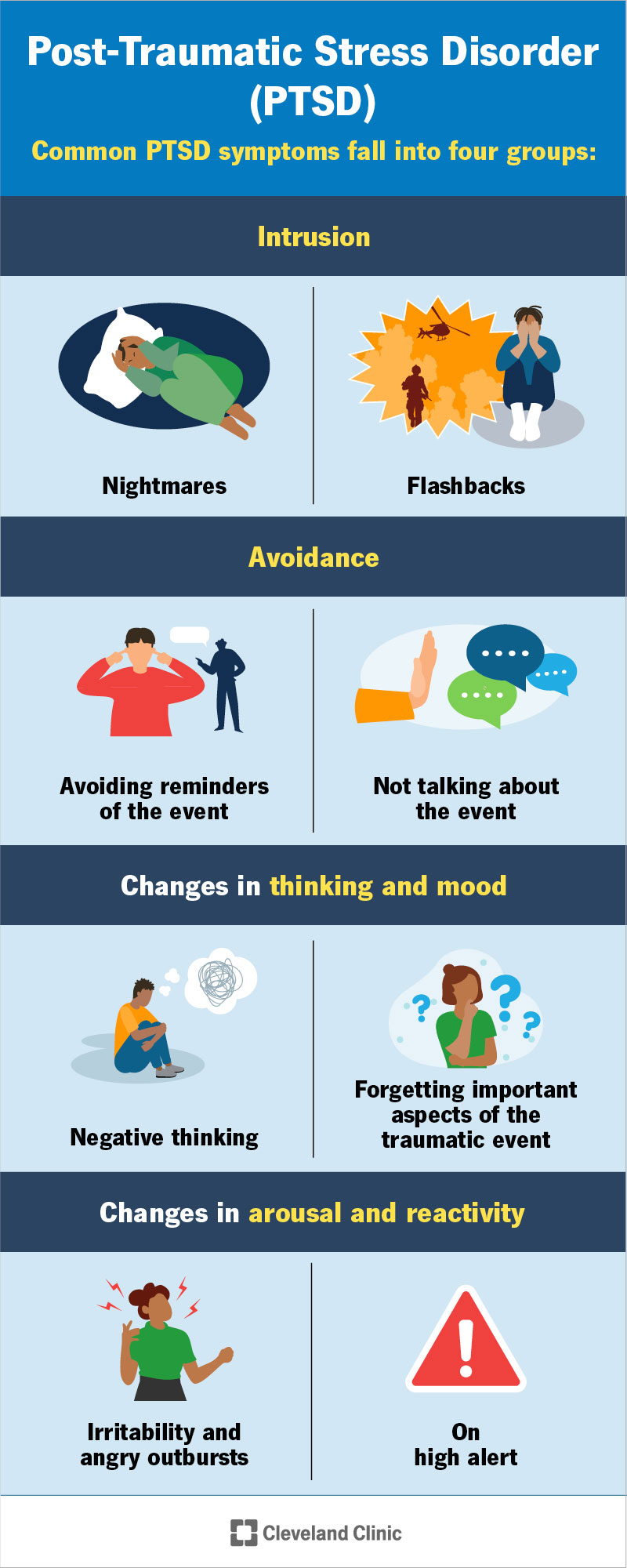
While the symptoms of PTSD can vary greatly depending on the patient, there are four main groups of symptoms that are most commonly seen:
- Intrusive thoughts – sometimes called “flashbacks,” the negative memories come back into the person’s mind when they don’t want to think about it. This can be in the form of nightmares and also night terrors, or at a random time of day.
- Avoidance symptoms – avoiding people, places, or situations that might remind the person of the event, as well as just not being willing to talk about what happened.
- Changes in thinking or mood – a person suffering from PTSD might blame themselves for the event, even when that isn’t accurate. They can feel guilt, shame, or feel detached from other people who were not involved. In some cases, they may not remember certain parts of the event at all.
- Changes in reactions – someone suffering from PTSD might have unexpected angry outbursts, have trouble concentrating or sleeping, or always seem like they are on high alert or overly preoccupied with their surroundings.
PTSD in Children
When PTSD occurs in children, the symptoms can be similar but can also mimic some of the same symptoms of ADHD, such as fidgeting, acting sad, throwing tantrums, or losing interest in activities.
That’s why it’s vital to see a mental health provider in Dallas or online for a full consultation to narrow down what the actual condition is before recommending treatment.
Similarities in Triggers
For a person suffering from PTSD, a “trigger” is something that happens that reminds them even more of the traumatic event and makes their symptoms even more intense. Some common examples of triggers might include:
– The sound of fireworks reminding someone of a war zone.
– A specific smell reminding a firefighter of a deadly blaze.
– A song reminding someone of a loved one who hurt them.
– Even distinctive objects, like a certain type of phone or a painting, may trigger someone’s symptoms into an intense episode.

Why Does PTSD Happen?
While we don’t fully understand why some people react one way while others react differently in a stressful or traumatic situation, experts believe that it is tied to our brain’s stress chemicals. These “fight-or-flight” modes raise the heart rate, blood pressure, and cause changes in cortisol and norepinephrine levels when someone is stressed.
For some people, it may be harder to process those emotions and fears afterwards on a purely chemical level.
Other risk factors may increase the chance of someone suffering from PTSD after a traumatic event, such as:
– Living through a traumatic childhood experience or a natural disaster.
– Being a first responder, EMS, military, or even a doctor or volunteer in a war zone.
– Having little social support after a negative event.
– Already having existing mental health conditions such as anxiety and depression or having a family history of these conditions.
PTSD can also lead to the addition of other mental health conditions, anxiety disorders, sleep problems, and often substance abuse in order to mask the symptoms.
Suicidal thoughts and risky, self-destructive behaviors are also common in patients suffering from PTSD.
Mindwell Urgent Care Can Help
Mindwell Urgent Care can provide fast mental health appointments and consultations without the wait of many traditional health care systems.
We offer in-person treatment at our office in Dallas in the medical district, as well as online tele-psychiatry appointments from anywhere in Texas, Oklahoma, New Jersey, Florida, and Kansas. Our team of mental health providers will perform a psychological evaluation to truly understand what is going on with the patient and help to individualize treatment specifically for that person’s needs.
If medication management is recommended, we offer GeneSight Testing to easily identify which medications will work most effectively with the patient’s DNA. Our therapists and behavioral counselors are here to listen without judgement to help to process the negative thoughts tied to the traumatic event and replace them with healthier ones.
A Safe Space
Whether patients are seeking therapy and other mental health services in-person in Dallas or online, we create a safe, confidential space where patients can speak freely about what they may have experienced or witnessed.
No referral is needed from a primary physician to be seen at Mindwell Urgent Care, and most major health insurance plans do cover PTSD treatment, including Humana Military and Tricare for US service-members and their families.
If you have questions or concerns about whether your insurance will cover mental health services, or if you do not currently have health insurance – please do not let that stop you from calling us for help for yourself or a loved one suffering from PTSD. We have other options that we can discuss to make mental health care accessible to everyone, regardless of financial background.

Contact Mindwell Urgent Care Today
Post-Traumatic Stress Disorder is a serious mental health condition that can disrupt a person’s entire life, as well as increase the risk for other mental health problems. Many people turn to unhealthy coping methods, such as drugs and alcohol, in order to “quiet the noise.” Fear, guilt, and anger can also cause people suffering from PTSD to shut themselves off to others and refuse help, not wanting to relive those memories again.
Mindwell Urgent Care is here to provide fast, personalized mental health services for patients who may be suffering from PTSD, anxiety, depression, and a number of other mental health conditions. Whether you live in the DFW area and can come to our comfortable Dallas office for treatment, or if you prefer telepsychiatry from the privacy and comfort of home, we are here to help and provide caring, confidential support where you need it.
Contact our office today or click below to schedule an appointment directly into our online scheduling software.