
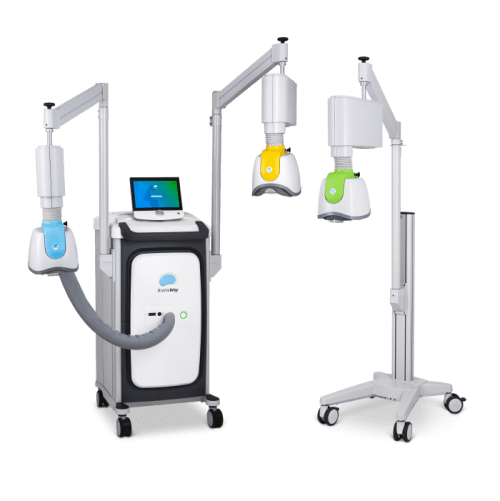
If you are considering Deep TMS for depression, one of the first practical questions is usually about cost and coverage. That is a fair question. Magnetic stimulation therapy sounds specialized, and nobody wants to start a multi-week course without understanding how insurance fits in.
Here is the short version we share with Dallas patients: Medicare and nearly all major private insurers cover TMS for depression when medical criteria are met. Coverage is never automatic, and it is never something we can promise until your benefits are verified. This post explains the typical criteria insurers look for, how MindWell handles the check, and what “in person only" means for TMS at our clinic.
What Insurance Usually Looks For
Insurers do not cover TMS simply because you are interested in it. They generally look for medical necessity tied to depression treatment history. On our TMS service page, typical requirements include:
– An appropriate diagnosis from a mental health provider, with sufficient symptom severity
– Lack of symptom improvement with medication trials, or inability to tolerate medication side effects
– Lack of symptom improvement with psychotherapy
Those bullets are a guide, not a checklist you can self-score. Plans differ in how many medication trials they require, which diagnoses they accept, how they define “adequate" therapy, and what documentation they want from your clinician. Some people who are still on medication or still in therapy remain eligible, because Deep TMS is considered safe to combine with both. Eligibility is determined by your plan’s rules plus a clinical evaluation—not by a single failed prescription alone.
If your history is complicated (partial response, side-effect dropouts, gaps in care, or therapy that was hard to access), bring that detail. Incomplete trials often matter as much as “failed" ones when we document medical necessity.
Medicare and Major Private Plans
According to our published clinic information, TMS treatment for depression is covered by Medicare and nearly all major private insurers when criteria are met. That statement is about depression coverage patterns—not a guarantee for your individual policy, deductible, or prior authorization.
What usually happens next:
– You complete (or schedule) a clinical evaluation so we understand diagnosis, severity, and prior treatments.
– Our staff checks the specifics of your insurance and clarifies eligibility requirements.
– We explain what your plan appears to require before you commit to a full course.
We also encourage patients to review our insurance page for common carriers and their websites, then confirm details with us. Online directories and member portals can be helpful, but they do not replace a benefits verification for TMS.
We never promise coverage. Two people with the same carrier can get different answers based on plan type, prior authorizations, remaining benefit limits, or documentation. The honest next step is a benefits check tied to your evaluation—not a blanket yes or no from a blog article.
TMS at MindWell Is In-Person Dallas Care
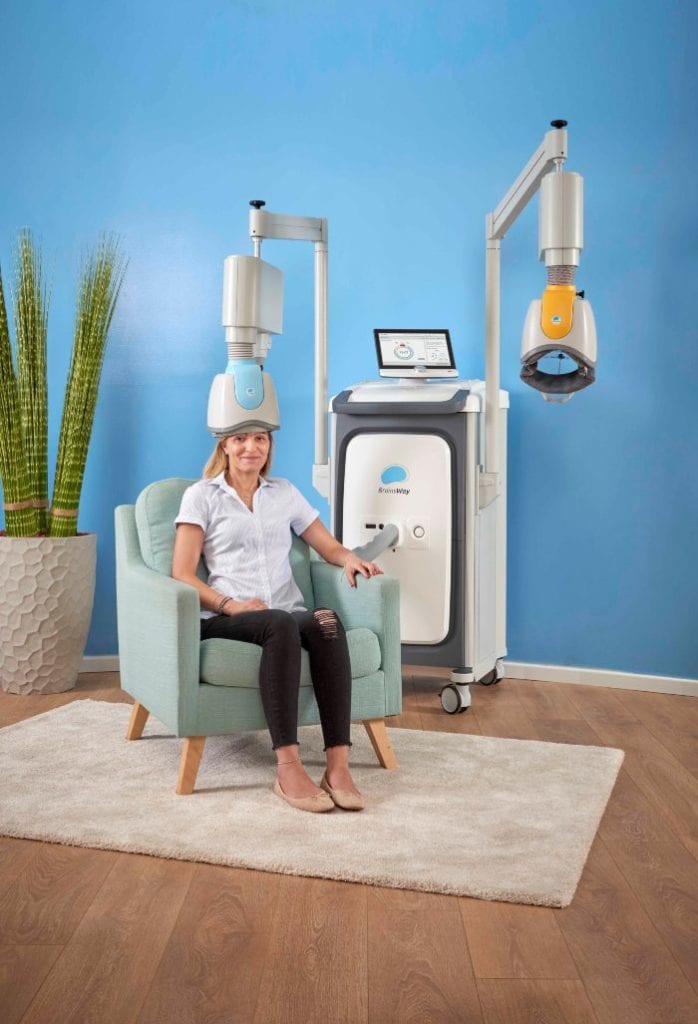
Even when insurance supports TMS, logistics matter. At MindWell Urgent Care, BrainsWay Deep TMS sessions are in person only at our Dallas office:
1250 W Mockingbird Ln #315, Dallas, TX 75247 (in the hospital district, just off Highway 35)
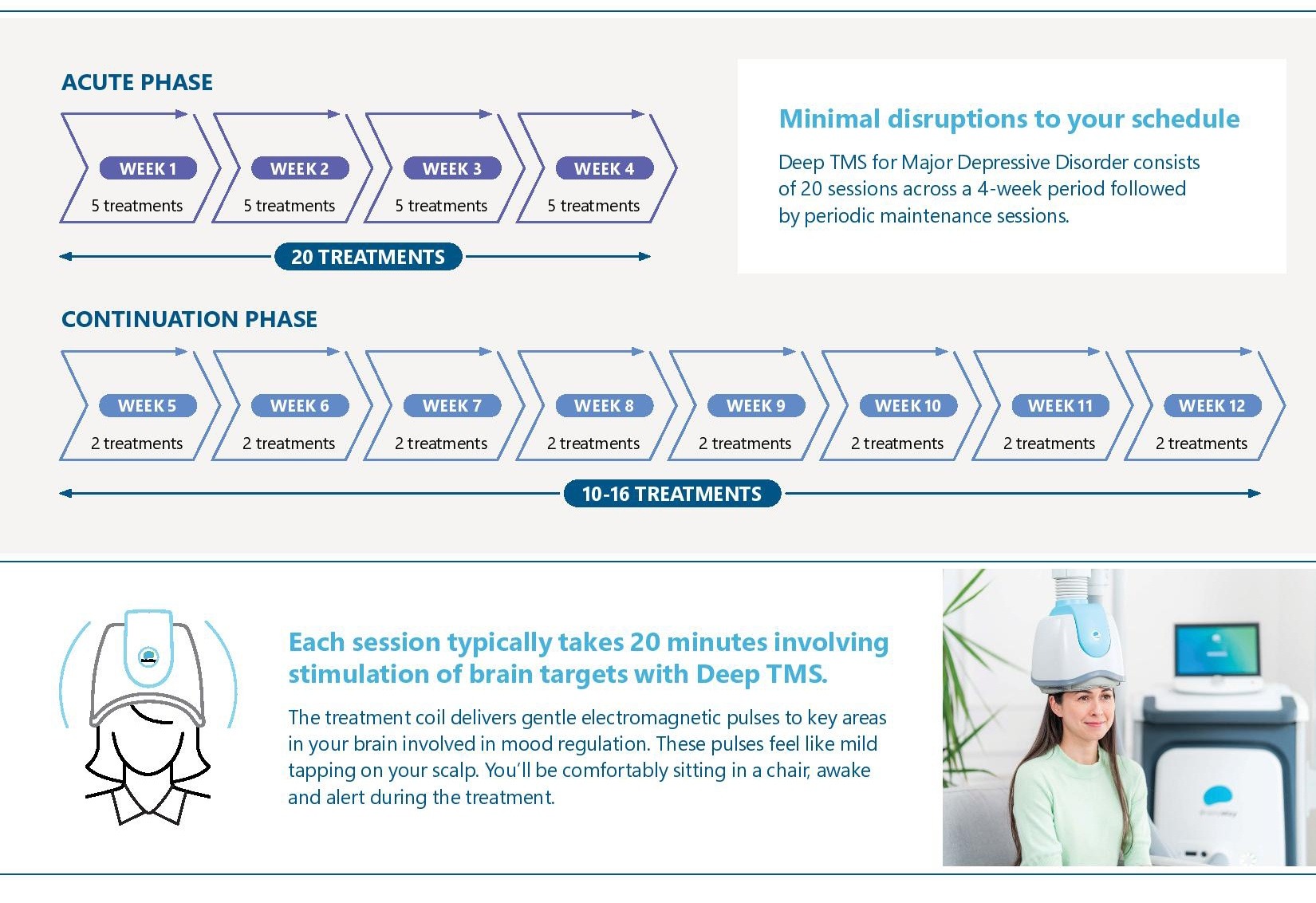
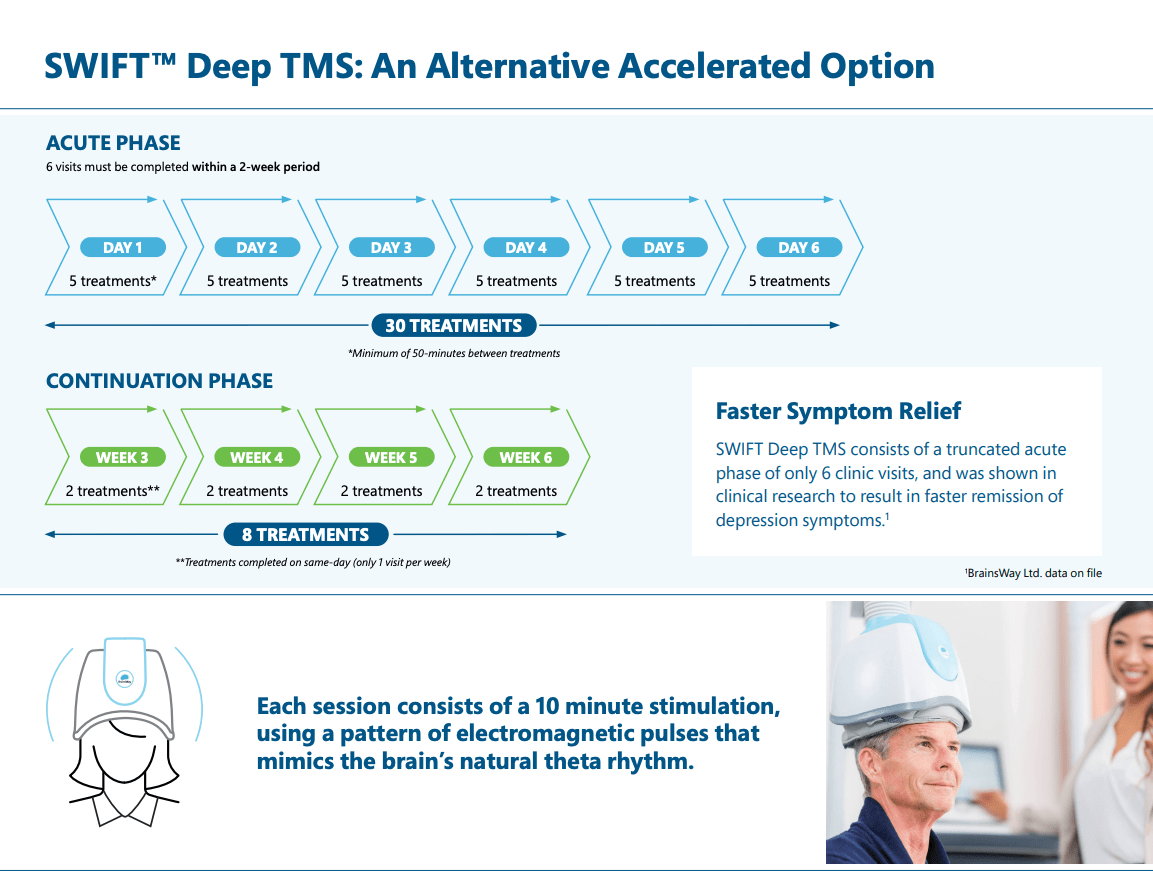
A typical depression course is about 20 minutes per session, five times per week, for roughly four to six weeks. An accelerated option called SWIFT is available if you qualify. Because sessions are non-invasive, most people can drive themselves afterward and return to their day. Possible side effects include mild headache or scalp irritation; during treatment you may notice tapping sounds and scalp pressure.
We offer telepsychiatry for other psychiatric care in Texas, Oklahoma, New Jersey, Florida, and Kansas. Telehealth can help with evaluations and ongoing mental health care in those states—but TMS treatments themselves are not done by video. Every session happens under clinical supervision in Dallas. Care at our Dallas office is under the clinical leadership of Dr. Ashkan Soltan, MD.
If you are traveling from elsewhere in DFW, plan for recurring weekday visits during the initial course. That rhythm is part of why clarifying coverage and schedule together is useful before you start.
What a Benefits Check and Evaluation Look Like
You do not need a referral to contact us. We often offer same-week—and frequently same-day—evaluations when capacity allows. For someone exploring TMS, the appointment is less about sales and more about fit:
– Is Deep TMS clinically appropriate for your depression history?
– Do your symptoms and prior treatments align with how insurers typically define medical necessity?
– Would continuing medication and therapy alongside TMS make sense for you?
– Is an in-person Dallas schedule realistic for the recommended course?
Our staff then works through the insurance piece: what your plan covers for depression TMS, what documentation is needed, and what questions remain. If TMS is not the right fit—or not covered for your situation—we still help you understand other paths. The evaluation is useful either way.
For a fuller clinical overview of BrainsWay Deep TMS, visit our service page: TMS Therapy for Depression. If you want the day-of experience in plain language—helmet, tapping, timing, and aftercare—read our companion post: What Does a Deep TMS Session Feel Like? BrainsWay Therapy Explained.
Next Step: Schedule a Benefits Check
If medication and therapy have not brought enough relief, and you are wondering whether insurance could support Deep TMS, start with a conversation—not a commitment. Call our Dallas office, ask about a benefits check, and schedule an evaluation so we can review your history and your plan together.
Click the Schedule Now button to be taken directly to our online scheduling portal, or give us a call today.
Safety Information
If you or someone else is in immediate danger or cannot stay safe, call or text 988 (Suicide & Crisis Lifeline) or go to the nearest emergency room. MindWell Urgent Care provides urgent psychiatric care; we are not an emergency department.